
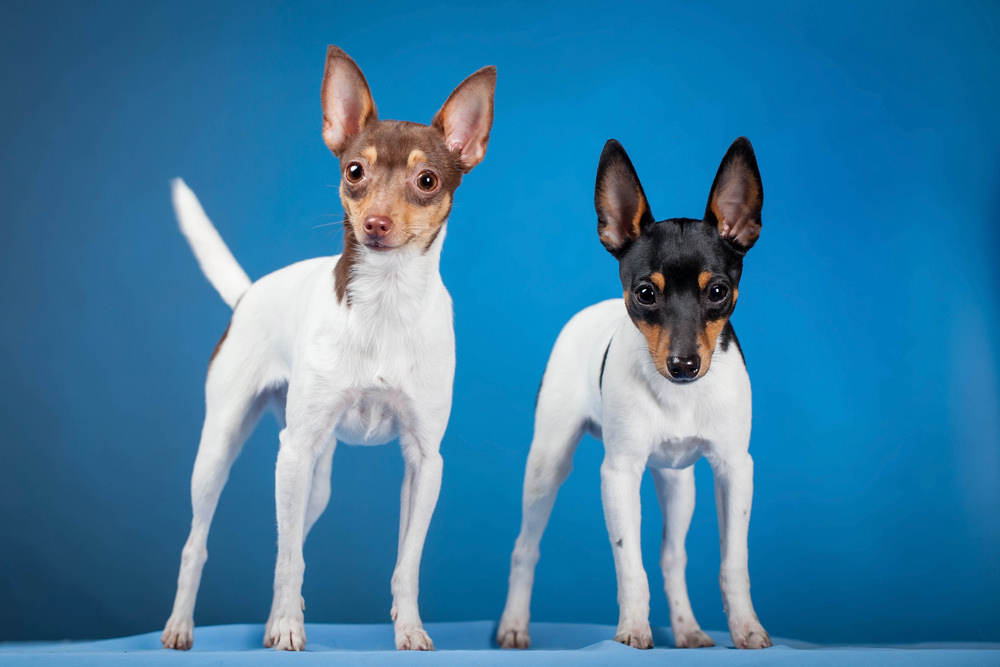
Group: Toy
Weight: 3.5 to 7 Lbs
Height: 8.5 to 11 Inches
History Toy Fox Terriers are truly American, and was developed during the 1930s by crossing the Smooth Fox Terriers with a variety of toy dog breeds such as the Miniature Pinschers, the Italian Greyhounds, the Chihuahuas and the Manchester Terriers. The breed that was developed kept its terrier instincts, but they inherited a calmer nature from all the other breeds. Toy Fox Terriers are excellent companion dogs, and they also do extremely well in the show arena.
Characteristics
The Toy Fox Terrier is a very small, but strong and energetic breed. This breed is considered to be more receptive and also teachable than most of the other terrier breeds. These dogs are very alert – they are also resilient and playful. They have no fear, and are also not easily intimidated.
Temperament
The Toy Fox Terrier is a very amusing and entertaining little dog – even when they get older. They are feisty, gritty and also have lots of courage. These dogs are wonderful companions for the family and will work well with experienced and inexperienced dog owners. The Toy Fox Terrier can be very protective, and will bark to raise an alarm if it’s needed – this makes them very good watch dogs. These dogs love to play outdoors, but can also kept them entertained and busy indoors. This breed is very supple and quick, and has a very curious nature. Therefore these dogs should be kept in a secure area which will not allow them to escape.
Care
These dogs will work well with those with little time for grooming, as these are very low maintenance dogs. Their coats should only be brushed occasionally to keep it in a good condition. These dogs are not heavy shedding dogs, but they do shed their coats once a year and therefore not suited for allergy sufferers. For more detailed info, take a look at the Toy Fox Terrier Grooming page.
Training
These dogs are very intelligent, and the Toy Fox Terrier is fairly quick to learn. Early socialization of these dogs and obedience are recommended at a very early age. These dogs will not respond well to rough training methods, and training should be conducted in a fair, firm and consistent manner. This breed is remarkably talented, and they do extremely well as hearing dogs for the deaf or as a helper to the handicapped.