
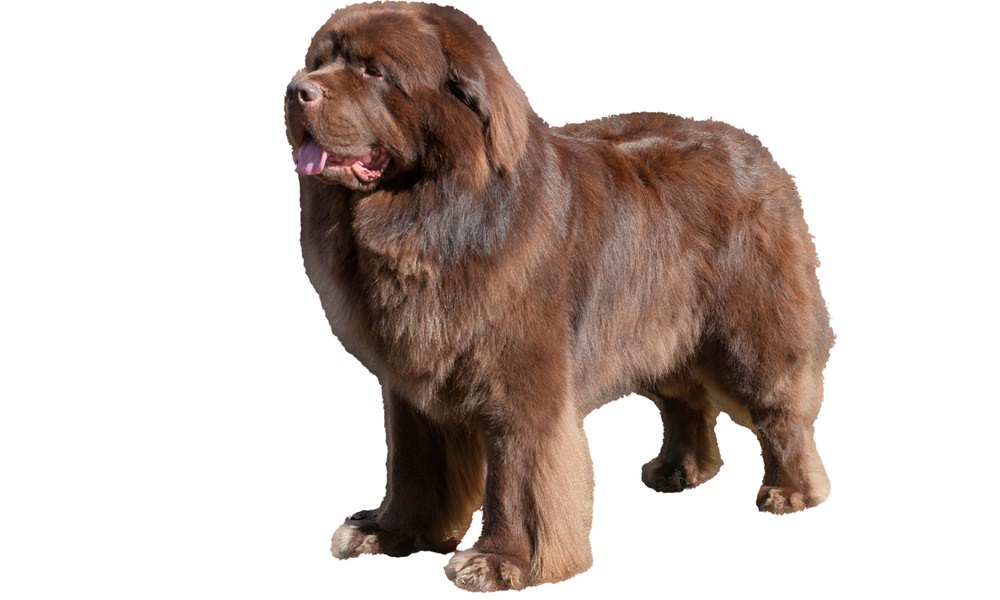
Group: Working
Weight: male: 130-150, female: 100-120 lbs
Height: male: 28, female: 26 inches
History It is not entirely known who the predecessors of these dogs are. Some people say that the Vikings brought them to Newfoundland, and other believes that these dogs have their decadence from the Tibetan Mastiffs. Although there isn’t certainty about their origin, it is well known that these dogs have been developed as sea rescue dogs. They had to carry lifelines to sinking ships, and they also help to pull in the fishermen’s nets. These dogs became very well like during the 18th century in both England and France.
Characteristics
The Newfoundland is a very sweet natured dog. They come across with a lot of grace and courage. They are the personification of distinction. They also conduct themselves in a very grand and dignified manner. Newfoundlands are very committed and very pleasant dogs. Many consider them to be one of the friendliest dog breeds that there are.
Temperament
In general this breed is very calm and trustworthy. These dogs make an excellent choice as family pets. They are suited to both the inexperienced and experienced dog owner. Newfoundlands are very submissive dogs, and they also have good manners. This dog love to show his family a lot of love and affection. These dogs are very clever and bright, and training them is not too difficult. The Newfoundland is usually very keen to please their owners. They also enjoy a lot of space in which they can play and exercise in. These dogs are very fond of water, and will swim whenever they get the chance.
Care
This breed of dogs has a high level of grooming. It is therefore important to comb and brush the Newfoundlands on a regular basis. Special care should also be taken of their bottoms in order to prevent tangles from forming. Any excess hair between the pads of their feet and in their ears should also be kept short. For more detailed info, take a look at the Newfoundland Grooming page.
Training
Newfoundlands may prove very hard to train, as they are extremely sensitive dogs. They also will not respond positively to rough training methods. These dogs will require their trainers to treat them in a very calm and tolerant voice. Newfoundlands tend to do well with basic obedience training, and has to be socialised from an early age onwards. Many of the Newfoundlands are trained as work and guard dogs.