
Group: Working
Weight: 154-200 lbs
Height: Male 25-28 inches, female 23-25.5 inches
Life expectancy: 12-15 years
Size of litters: 7-12 puppies
History
Originated in South Africa, the African Boerboel is believed to have been developed with the English bulldog and the Bullmastiff. Jan van Riebeeck had brought the ancestor breed of the African Boerboel (the bullenbijter), to the Cape of Africa in 1652 from Holland. They were solely bred for protecting the home and breeding is still being refined today.
Characteristics
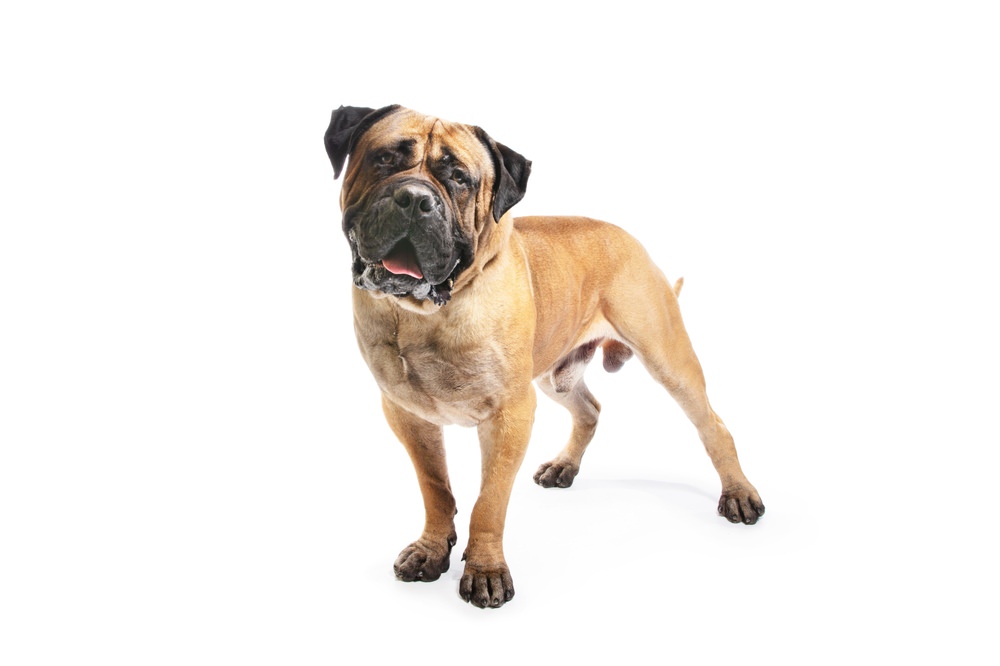
The Boerboel is a strong well balanced dog. The head is square and wide in shape, with a thick black mussel and large nostrils, the face can have a black mask. The ears are triangular and folded over and their wide eyes can come in most shades of brown. A curved muscular neck sits on a well proportioned body with straight front legs. The chest is muscular and broad. They come in a range of colours: brown, red-brown, yellow, brindle, red, fawn.
Temperament
This breed is intelligent and has a keen watchdog instinct. They’re fearless and dominant but will listen to their families. They’ll be excellent around children they’ve been brought up with but it’s not advised to leave them alone with children. They also need to be watched around strangers as they’re very protective. Love and attention is what they strive for and playing with their families is enjoyed enormously.
Care
The short coat of the Boerboel is very easy to look after and only needs to be groomed once or twice a week with a firm brush. Bathing them is not a problem but only when it’s needed as it may dry out their skin. Their nails need to be checked and clipped if too long. They’re average shedding dogs which could be a problem for allergy sufferers. They’re a healthy breed and don’t face any known problems. A long daily walk and a big garden or yard to run around and play in is a must. For more detailed info, take a look at the African Boerboel grooming page.
Training
As they’re intelligent, training them won’t be a problem but they must be controlled at all times. An important point of training is socialisation and obedience is also a must. You will need to be firm and consistent but never harsh and cruel. Their eager to please and work with their owner but must be shown who is boss as they’ll try to dominate. Experienced owners would be an advantage for this breed.