
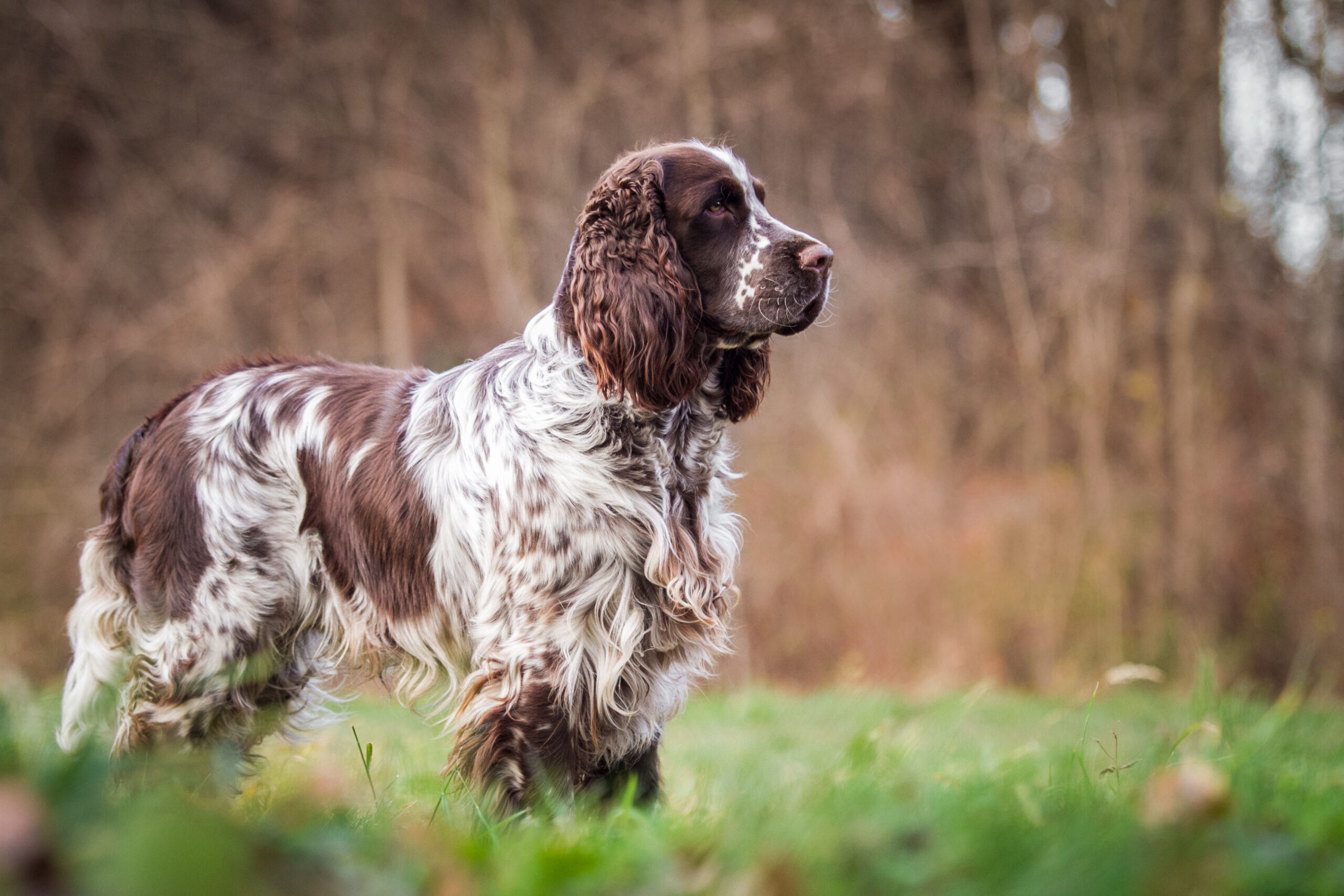
English Springer Spaniels have a long-haired double coat. These are traditionally show dogs so the levels of grooming needs are moderate to high. In addition, they have a high level of shed so daily brushing is important. Regular brushing is one of the best things you can do to keep your pet healthy and happy. Always brush in the direction of hair growth. It’s very important to brush a dog with an undercoat. Mats can develop that harbor fungus and create infection. If the mats develop to the point that the dog needs shaving, it can create problems for the dog. Their seasonal growth cycle is disturbed. They will have problems regulating their temperature, they can get windburn or sunburn and shaving completely changes their coat texture.
Brushing:
. Removes dirt and debris . Invigorates skin . Spreads oils to moisturize skin and keep a shiny coat . Prevents mats and tangles which are irritating painful and can harbor bacteria, fungus, other infection . Keeps your house much cleaner especially during shedding seasons . Bonding, massaging, loving interaction . Early detection of fleas, tics, eczema, infection and smells
Tools: Pin brush, Slicker, Medium-toothed comb, Fine-toothed comb, Curry comb, Spray Conditioner.
Use a soft brush or curry comb on your English springer spaniel’s face and head. Use the rest of the tools to work out mats and tangles on the chest, haunches, hocks, ears and belly. Be sure to brace one hand against the dog’s skin when working on knots. Line brushing consists of holding hair up and out of the way and then brushing/detangling a small amount of hair, a row or line at a time from underneath. Always work from the inside out on a coat and from the bottom to the top of the hair. Tough places will be under the pits and haunches. The objective is to be able to comb through your dog’s hair with the medium-toothed comb on the body and the fine-toothed comb on the ears and feathers.
Eyes: Check your dog’s eyes daily.
Debris is often flushed to the corners of the eyes, daily wiping with a wet cloth or paper towel can keep that bacterial breeding ground from building up.
Ears: Check ears once a week.
English Springer Spaniels tend towards ear infections more than most other breeds. Their eyes should be pink and healthy inside. If not, don’t do anything to them until you see a vet. Keeping ears clean minimizes odor, removes dirt, bacteria and mites trapped in wax. Never use a cotton swab on the inner ear.
Tools: Cotton balls or a soft cloth and ear solution.
There is solution made specifically for dogs but substitutes include: hydrogen peroxide, alcohol, mineral oil, witch hazel, and tea tree oil. Place a few drops of ear solution in ear and rub and massage to loosen the wax. Swab out with a cotton ball or cloth.
Ear Hair Plucking: Every two weeks.
Hair growing into the ear canal can prevent the canal from drying properly and can trap bacteria, causing infection.
Tools: Tweezers, powder, chalk, rubber gloves all optional
Lift the dog’s ear and lay it back. Grasp the hair along the inside of the ear between thumb and forefinger and pull firmly. This hair removes easily but tools may be needed if the hair is slippery.
Teeth: Regularly.
80% of 3 year old dogs have periodontal disease from unhealthy teeth and gums. Cavities and gum disease are painful for your dog; they diminish its pleasure and ability to eat. Bacteria that develops can infect the heart, kidney, liver and brain. Really bad breath is usually a sign of gum disease.
Tools: Toothbrush/finger cap/cloth, doggie toothpaste, tooth scraper
Never use human toothpaste. It is not edible. Starting your English springer spaniel out with this practice takes patience. Reward them constantly, no matter how bad their behavior to create good associations with grooming. Start out getting them used to their mouth being handled, and then progress to touching the dogs’ teeth with your finger. Get some meat-seasoned toothpaste and apply with your finger to makes this easier. Introducing the brush is the next step, taking a few teeth at a time you will have a routine that takes just minutes. Brush in a circular motion and get under the gum line. If you don’t want to brush everyday, use a tooth scraper to get rid of the plaque buildup once or twice a month. Most accumulation is on the outside of the teeth and on the back molars of the dog. This won’t be so much fun for your English springer spaniel or you though. Lots of bones and hard, crunchy foods can minimize plaque but not to a truly effective degree.
Nails: Every two weeks.
Nail care is very important to your English springer spaniel. Nails that aren’t trimmed can splinter and infect the quick or grow and curl into the flesh. This can be painful for your dog to walk on, affect it’s gait, posture, and eventually it’s skeletal and ligament health. Nails should never touch the ground. When your dog is standing, its nails should always rest above the ground. If you hear scraping on the kitchen floor, clipping is past due.
Tools: Doggie Nail Clippers (Scissors, pliers, guillotine), Dremel or file, Styptic or Kwikstop.
Sit beside your dog and put your arm around their shoulders if you can, so that you are clipping from underneath and at the right angle. Lift the paw and press gently to expose the claw. If it has a clear nail you should be able to see the quick: a dark bundle of nerves and blood vessels. Clip from underneath close to the quick but do not cut into it. If you do, your dog will let you know as it will be in pain. Use Styptic pencil or Kwikstop to staunch the bleeding. Buff the ragged edge with a file or Dremel. Some dogs can handle their nails being buffed by the Dremel regularly rather than clipping at all. If it has a dark nail, clip just under the curve of the nail and then you will be able to look inside and see the quick at close range. Clip tiny snips at a time. Don’t forget to check for dewclaws: an extra claw dogs may have farther up on the leg that works like a thumb. It’s better to clip your dog’s nails more frequently than not as this causes the quick to recede farther away from the tip.
Paws: Check daily/Trim every two weeks.
It is very important to check between dog pads for foreign objects that may have wedged there and to check the pads themselves for cuts, scrapes and infection.
Tools: Small, blunt scissors, straight scissors, slicker brush, comb.
English Springer Spaniels have hair that grows between pads that can mat and trap bacteria besides becoming painful to walk on. Trim hair around the paw to keep them cleaner. Do this when the dog is standing on the paw, then push feathers growing on top of the foot down through the toes to the pad. Lift the paw, and from the back, brush or comb out the hair and trim to pad level. Push the feathers back up through the toes and trim from the top.
Hygienic trimming: 2 to 4 weeks.
Tools: Thinning shears, electric clippers
Thinning, trimming and clipping at the ear opening, base of the tail, around the anus and privates keeps your dog feeling better as well as keeping it and your house cleaner. English Springer Spaniels also benefit from clipping around the mouth.
Expressing Glands: Every 2 to 4 weeks
This is a task normally done when you take your dog in for professional grooming. Your dog uses scent glands in the anus to mark its territory. These glands also excrete when your dog defecates. At times, they may get impacted. Signs of this include: increased doggie odor, excessive licking and chewing of the behind, and worst of all, scooting. That’s when your dog drags its butt or bottom along the carpet or floor. There is no risk of overly expressing these glands so it’s a good habit to become accustomed to as it will lesson dog odor.
Tools: Warm cloth
Lift the dog’s tail and hold the cloth against it’s behind. Place your fingers at 5 o’clock and 7 o’clock, press inward and squeeze to expel.
Bathing: As needed
Most dogs do not need regular bathing. They have natural oils that moisturize their skin, keep their coat glossy and resistant to dirt and water. Stripping these oils with frequent bathing dries out the skin and is a detriment to a healthy coat. The English springer spaniel, however, with its long silky hair and outdoor lifestyle, will need more frequent bathing to keep tangle, debris, fleas, ticks and infections at bay. Bathing can also help get rid of a large amount of hair during shedding seasons.
Tools: Non-slip mat, sprayer hose, dog shampoo, conditioner, leash, towels.
Choose a place where you can close off escape routes and expect 1-3 water-spraying shakes. A leash tied to a higher point than your dog’s head will keep them standing and deter escape. This is highly recommended as it’s really hard to stop a slippery dog. Never bathe your dog in standing water. A sprayer hose is a must. Wet your dog using your hand to massage and lift the hair to get to the undercoat. Avoid getting water into the eyes, nose and ears. Massage lather down to the undercoat. Rinse thoroughly as leftover shampoo can severely dry out and irritate your pet’s skin. Condition feathers and Siphon off excess water by running your hands along its body and pressing down. Towel your dog dry, then comb and blow-dry feathers.
The Salon Treatment: Varies by preference.
Is your English springer spaniel a companion or a show dog? There are very explicit specifications for showing. A professional groomer can guide or instruct you. If you’re not concerned about showing but would like to keep your dog to some semblance of traditional form there’s much you can do yourself, but remember, you and your dog do not have to be slaves to fashion.
Tools: Slicker, Medium-toothed comb, Fine-toothed comb, Thinning Shears, Straight Scissors, Electric Clippers, Clipper wash, #10 Clipper Blade, Optional stripping/plucking tools
English springer spaniels do require some hand plucking or stripping. Check with a professional groomer for advice and guidance on how often and where on your dog this is necessary.
Hand Plucking or Stripping
Hand plucking or stripping is pulling out dead hair from your dog. Clipping this hair alters the texture and color of your dog’s coat. Your English springer spaniel will tend to accumulate much of this hair and it detracts from the shape and form of its coat. Stripping is a way of thinning this hair. Always pluck or strip before a bath. Wet hair is impossible to grasp and it’s a good idea to bathe away irritation and clean any cuts or abrasions that may occur. Purists always hand pluck. This involves holding the pelt of your English springer spaniel down with one hand, grasping some hairs between thumb and forefinger, and giving a fast tug. Dead hair comes out easily. Never twist the wrist. This cuts the hair rather than getting it from the root. If needed, apply powder or chalk to the dog’s fur or your own fingertips for better grip. Some swear by a rubber glove. Stripping is plucking with a tool. Stripping knives come in different sizes. A common one for the thick hair of the English springer spaniel is the Mars stripper. Consult a professional groomer to determine which is right for your dog. Make sure this knife is dull. The purpose is not to cut the dog, the hair or yourself but to grip hair. Grasp the stripper and hold it perpendicular to the dog’s hair growth. Grab some hair between the stripper’s teeth and your thumb, rotating the blade away from the thumb and give a quick pull. Hand plucking and stripping are time and labor intensive. Work in sections as your dog can only tolerate it for so long at a time.
Basic Groom:
After brushing, bathing, and brushing again Pluck ear hair. Use clippers to trim inside ear, top1/3 of ear, around and behind the ear. Use thinning shears and comb to blend. Use straight scissors to neaten outer line of the ear. Pluck or strip dead hairs from the head. These will show up as longer hairs of a different color. Use comb and thinning shears on throat, chest hair, hocks (the feathers behind the front legs) and rump. Use the clippers and #10 blade to shave the neck and under chin. Shave head and face from cheek to ear. Use thinning shears and clippers to blend. Comb out haunches (the feathers on the back legs) and use straight scissors to cut off in a straight line up from the back of the foot. Comb out and neaten the feathers-line of the hock with the straight scissors. Comb the tail hair over to one side and cut with some straight scissors. Comb back over to the other side and then repeat the process. Trim the end of the tail and under the tail. Follow the paw instructions to groom the feet.